
How to Spot Quality Finish Carpentry: 7 Details to Check
- Partner Crew Rated 5.0 on Google
- Free Estimates
- Serving MA, NH & CT
Get Your Free Estimate
Tell us what you need — we'll get back to you fast.
- Free, no-obligation estimates
- Fast reply by email
- Clean, precise finish work
- Homes & businesses in MA, NH and CT
The Short Answer
Published October 28, 2026 · Finish Carpentry Near Me
Quality finish carpentry shows in details you can check yourself: corner joints that stay closed, even reveals around doors and windows, trim that follows the wall without gaps, nail holes you cannot find after paint, and doors that close and latch on their own.
Finish work is the part of a house you see and touch every day. A rushed job looks fine on day one and opens up after the first winter. Here is what to look at, room by room.
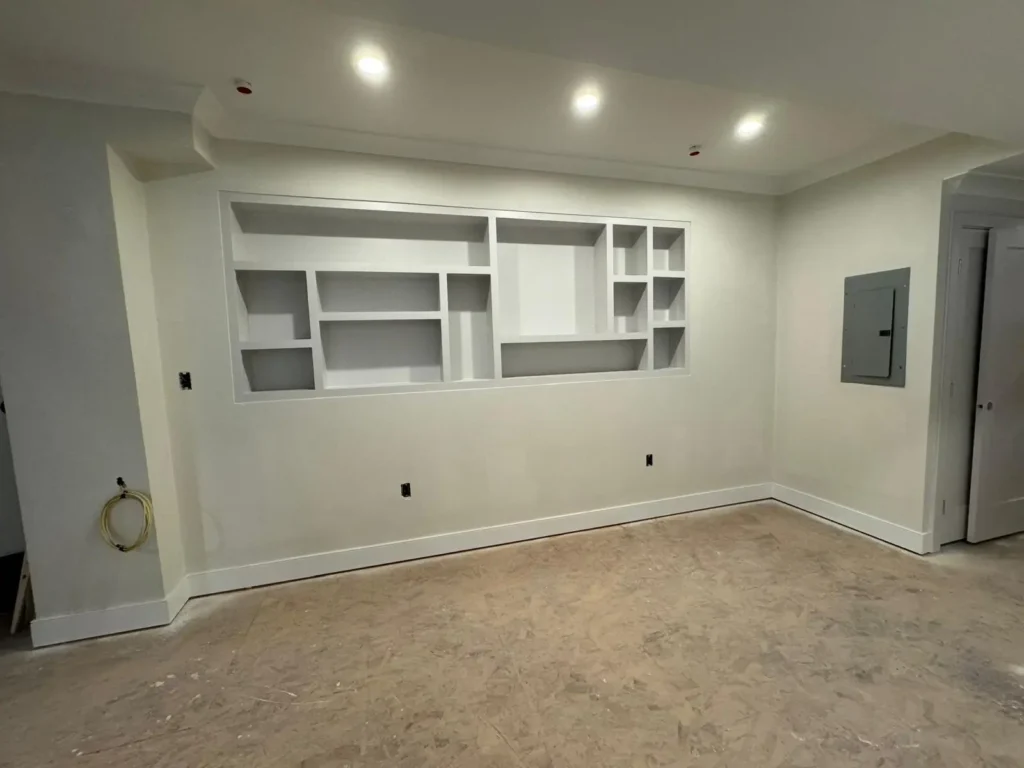
7 Details That Show Quality Work
1. Corner joints that stay closed
Look at the corners of crown molding and baseboards. Outside corners should be a tight miter with no dark line. On inside corners, a careful carpenter usually copes the joint (cuts one piece to the profile of the other) instead of just mitering it, because a coped joint stays closed when the wood shrinks in winter. If you see gaps filled with a thick bead of caulk, the joint was not cut to fit.
2. Even reveals on door and window casing
The reveal is the small step between the edge of the jamb and the casing. It should be the same width all the way around, usually about 1/8 to 1/4 inch. A reveal that is wide at the top and disappears at the bottom tells you the casing was nailed on without checking.
3. Trim that follows the wall and the floor
Walls and floors are rarely straight, especially in older New England homes. Good baseboard and wainscoting are scribed, which means trimmed to follow the dips in the floor and the wall, so there is no gap at the bottom. Slide a sheet of paper under a baseboard: it should not pass.
4. Nail holes and seams you cannot find
After paint, filled nail holes should disappear. Long runs of trim are joined with a scarf joint (two angled cuts glued together), not a flat butt joint, and you should have to look hard to find it. If you can spot every nail from across the room, the prep was skipped.
5. Doors that swing, close and latch
An interior door that is hung right opens and closes without rubbing, stays where you leave it, and latches without a push. The gap around the door should be even, about the thickness of a nickel, on the top and both sides.
6. Level, plumb and square where the eye checks
Shelves, cabinet doors, the cap of a wainscoting panel and the lines of a coffered ceiling are where people notice anything out of level. A good carpenter sets these to a level line, not to a crooked floor or ceiling, and hides the difference in the trim.
7. Clean caulk lines and a job ready for paint
Caulk belongs where trim meets the wall, in a thin, straight line. It is not a filler for open joints. When the carpenter is done, the trim should be ready for the painter: holes filled, edges sanded and no glue squeeze-out left behind.
Why It Matters in New England Homes
Wood moves with the seasons. Dry heat in a New England winter shrinks trim and summer humidity swells it, so joints that were not cut and fastened properly open up within a year. A careful carpenter lets the material acclimate in the house before installing it, glues the joints that need it, and fastens into framing, not just drywall.
Older homes add another layer: walls out of plumb, floors that slope and openings that are not square. That is where finish carpentry is a skill and not just installation.
Questions to Ask Before You Hire
A good finish carpenter will be glad to answer these:
- Can I see close-up photos of recent trim work, not only wide shots of finished rooms?
- Do you cope inside corners on crown molding and baseboards?
- Will the material acclimate in the house before it goes up?
- Is filling, caulking and sanding for paint included, or is that left for the painter?
- What exactly is included in the estimate, and how is the job site cleaned up each day?
Want a second opinion on your project? See our Finish Carpentry Services or send the details through the estimate form. Estimates are free and we reply by email.
Why Homeowners Choose Us
Precision Craftsmanship
Every detail matters.
Fast & Reliable Service
We show up on time.
Clean & Professional
No mess left behind.
Custom Solutions
Built to match your vision.
100% Satisfaction Focused
The job is done when you are happy with it.
Finish Carpentry Services
Trim & Baseboards
Clean, precise trim and baseboard installation to elevate your interior finish.
Door Installation
Professional door and frame installation with perfect alignment and finish.
Crown Molding
Add elegance and value to your home with detailed crown molding work.
Custom Woodwork
Tailored wood solutions designed to match your style and space perfectly.
Wainscoting & Paneling
Classic wall paneling and wainscoting that add depth and character to any room.
Cabinet Installation
Cabinets set level, secured and trimmed for a clean, built-in look.


Your Free Estimate in Three Simple Steps
1. Tell Us About Your Project
Fill out the short form with the service you need and a few details about the space.
2. Get Your Free Estimate
We review your request and reply by email with a custom estimate for your project.
3. We Do the Work
Once you approve, we schedule the job and complete it with clean, precise finish work.
Questions, Answered
What is the difference between coping and mitering?
A miter joins two pieces with matching angled cuts. A cope cuts the end of one piece to the exact profile of the other, so it fits over it like a puzzle piece. Coped inside corners stay tight as the wood moves, which is why careful carpenters use them on crown molding and baseboards.
Is caulk a sign of bad finish carpentry?
No. A thin bead of caulk where trim meets the wall is normal and gives a clean paint line. It becomes a warning sign when thick caulk is used to fill open joints or gaps along the floor that should have been cut or scribed to fit.
Why do trim joints open up in winter?
Indoor air gets very dry when the heat is on, and wood shrinks. Joints that were not glued, coped or fastened into framing pull apart. Letting the trim acclimate before installation and cutting joints that allow for movement prevents most of it.
Can poor trim work be fixed without replacing everything?
Often, yes. Open joints can be recut, reveals adjusted and doors rehung. Sometimes a few pieces need to be replaced. A carpenter can tell you on site which option makes sense for your rooms.
What Homeowners Say About Our Partner Crew
Every project is installed by our partner crew, RD Finish Carpentry. These are their Google reviews · see all on Google.
 Trustindex verifies that the original source of the review is Google.

 Trustindex verifies that the original source of the review is Google.
 Trustindex verifies that the original source of the review is Google.
 Trustindex verifies that the original source of the review is Google.
 Trustindex verifies that the original source of the review is Google.

Get a Free Quote for Your Finish Carpentry Project
Get Your Free Estimate
Tell us what you need — we'll get back to you fast.